

Every year in the UK, 10.2 million tonnes of food are wasted – enough to fill Wembley Stadium nine times. While households are the biggest culprits, wholesale markets face unique pressures.
At the centre of this story is Birmingham Wholesale Market (BWM), one of Europe’s largest integrated markets. For centuries it’s been the beating heart of Britain’s food supply chain – today serving pubs, restaurants, hotels, caterers, and local retailers.
But with abundance comes waste. Weather gluts, sudden shifts in demand, and short shelf lives mean not every tomato, box of spinach, or pallet of mushrooms makes it to a plate. Until recently, much of this surplus was treated as general waste – ending up in landfill or incinerated, releasing greenhouse gases and wasting the energy, water, and labour behind it.
Across the UK, a quarter of all food bought for the home goes to waste. In the wholesale sector, the challenge is magnified by high volumes, slim margins, and unpredictable demand. Yet, this is also where some of the most innovative solutions are now emerging.
A Legacy Market with Modern Challenges
BWM isn’t just a marketplace. With roots stretching back over 850 years, it’s part of Birmingham’s identity – a hub of trade, culture, and community. Today, it provides fresh produce to over 15,000 businesses, underpinned by a state-of-the-art site designed for efficiency, safety, and round-the-clock operations.
But heritage alone won’t tackle food waste. That’s why the market is embracing two major initiatives that highlight how tradition and innovation can work hand in hand.
At Birmingham Wholesale Market, we have a strong dedication to change, viewing ourselves as more than just a place of commerce. It is a vital hub where we are committed to providing the highest quality produce from around the world to the hospitality, leisure, and retail sectors. However, our responsibility goes beyond that, as we work tirelessly to ensure surplus produce is redirected to those in need. By partnering with The Active Wellbeing Society, we are actively supporting our community and contributing to over 300 charities across the city, demonstrating that a market can be both a commercial success and a force for social good.
A strong environmental strategy supports this commitment. We have put in place a comprehensive waste management system, including an advanced anaerobic digestion process for all waste produced, which converts it into renewable energy. To maximise our efforts, we have also introduced new plant equipment to carefully sort more waste for recycling, as we work towards a pledge of zero waste to landfill.

Feeding People, Not Bins
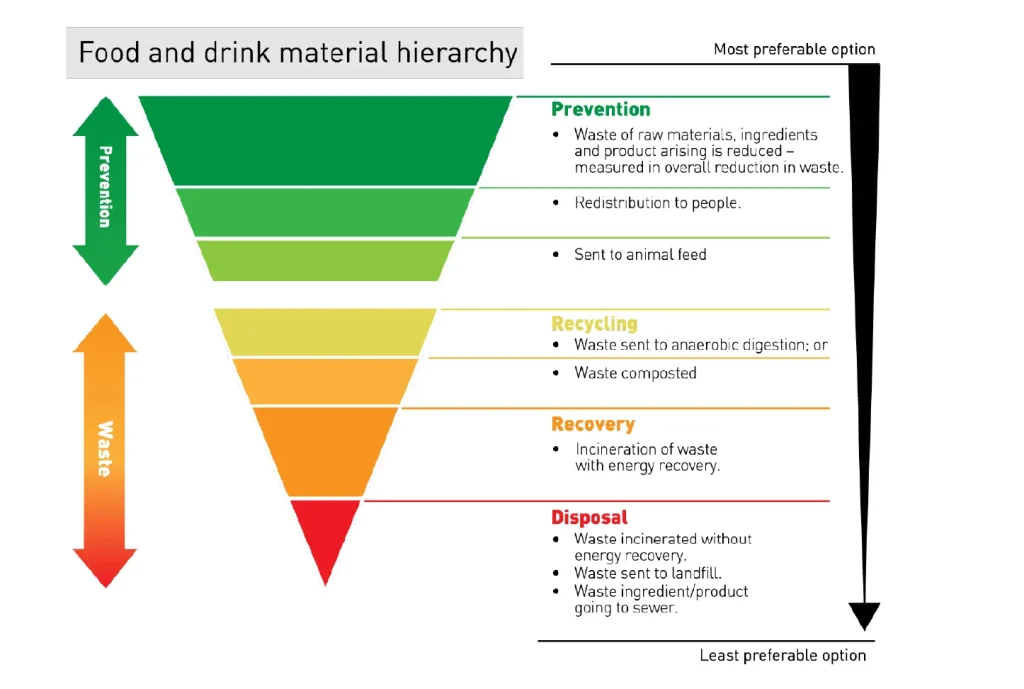
One of the most urgent challenges is preventing edible food from going to waste. To address this, BWM is working with The Active Wellbeing Society (TAWS) and Birmingham City Council to establish a Surplus Food Hub on-site.
This hub creates a structured way for traders to donate edible surplus that would otherwise be lost. Food is redistributed via the Food Justice Network – a coalition of 300+ community groups, charities, and kitchens, including Change Kitchen and Incredible Surplus. Together, they ensure fresh food reaches those who need it most in a city where demand for support is rising due to the cost-of-living crisis.
This project fills a gap: until now, there was no robust process for recovering surplus food directly at the wholesale market level. The hub has a dedicated coordinator on-site five days a week, building relationships with traders and maximising donations.
Active Wellbeing “We are really proud of the partnership with BWM who have made a dedicated space available for us to divert food to communities.
It’s still early days, but in addition to redistributing this surplus, we have cooked over 25,000 portions of food from this fresh produce which has also been redistributed to local food projects. These projects offer more than just meals. They provide respite, a place to talk, and a chance to reconnect socially and civically. They also offer opportunities to gain and share knowledge, find employment, and volunteer.”
What About the Inedible Waste?
Of course, not everything can be redistributed. Wilted lettuce, damaged produce, and spoiled goods still need to be managed responsibly. That’s where another Birmingham Wholesale Market innovation comes in – one built on its long-term partnership with Axil.

Axil has had a dedicated on-site team working alongside market staff and traders since November 2020. After a successful first year, the contract was extended for five years, and in November 2024 renewed again until December 2029 – a clear vote of confidence in the partnership. The team has since grown, providing the extra resource needed to deliver BWM’s ambitious sustainability goals.
A key milestone has been the introduction of a conveyor picking line – or “mini-MRF” (materials recovery facility) – that changes how materials are managed. Instead of treating everything as waste, the system identifies value in each stream, separating food, cardboard, wood, and plastics for recycling or reuse.

The results speak for themselves. In July alone, the picking line diverted 76% of materials from general disposal, including:
- 2.7 tonnes of plastics processed into secondary raw materials That single month translated into a £6,700 saving – proof that sustainability doesn’t just cut emissions, it cuts costs.
- 11.7 tonnes of food waste for anaerobic digestion, generating between 3,510 and 4,680 kWh of clean bioenergy
- 11 tonnes of cardboard recycled into new packaging
- 1.8 tonnes of wood recovered for reuse and recycling
“This is more than waste management — it’s a model of circularity and innovation,” says Lee O’Brien, Contract Manager at Axil. “Our work starts long before a single bin is moved. We assess, we observe, and we find ways to cut waste, boost recycling, and reduce cost. Together with BWM, we’re turning waste into opportunity — building a cleaner, safer, and more sustainable future for Birmingham’s wholesale trade.”
For Birmingham Wholesale Market, this isn’t just about cleaner operations — it’s about leadership.

“We’re proud to be setting the benchmark for wholesale markets across the UK,” says Andrew Barnes, General Manager at Birmingham Wholesale Market. “Our traders want their surplus to feed people, not end up in landfill or burnt. And when food can’t be redistributed, we now have systems that keep it in the sustainability loop. It’s good for the environment, good for business, and good for Birmingham.”
Together, food redistribution and advanced material recovery are showing how BWM is redefining what a wholesale market can be: a hub for commerce, community, and sustainability all at once.
Why It Matters
Together, these two initiatives – the Surplus Food Hub and the picking line – show the importance of tackling food waste from both ends:
- Edible surplus goes back into the community, feeding families instead of bins.
- Inedible waste is diverted into recycling and energy recovery, avoiding landfill or incineration and generating renewable energy.
This joined-up approach demonstrates the power of collaboration – between the market, the council, charities, and sustainability partners like Axil – to create solutions that work in practice, not just on paper.

Lee adds: “Collaboration is critical. It’s the difference between just managing waste and improving environmental performance. Working with the market and city partners has shown us that tackling waste isn’t just about disposal – it’s about finding value in every material and creating systems that benefit people, the planet, and the community.”
The Bigger Picture
The UK food industry is vast, and waste is one of its biggest symptoms. Food and drink are the country’s largest private sector employer, representing one in eight jobs and 40% of all retail sales according to the Food and Drink Federation. At every stage – from farm to supermarket – surplus is created. Wholesale markets sit at a crucial junction: if they can crack food waste, the ripple effect across restaurants, retailers, and households could be huge.
That’s why Birmingham Wholesale Market’s example matters. It proves that wholesale markets aren’t just trading floors – they can be catalysts for change in how we value, manage, and repurpose food.
Food waste in the UK isn’t just a logistics issue – it’s moral, environmental, and economic. Filling Wembley nine times with food that never gets eaten means wasting the land, water, and energy that produced it.
BWM shows that solutions exist. Edible surplus is redistributed through partnerships like TAWS, while inedible materials are transformed through Axil’s picking line into energy, raw materials, and savings.
For a city built on trade, this is a new kind of exchange: surplus for support, waste for energy, tradition for sustainability. If Birmingham can lead the way, other wholesale markets – and the wider food industry – may soon follow.