

What if we stopped asking where waste goes and started asking why it exists in the first place?
It is an uncomfortable question, but perhaps that is exactly what Zero Waste Week should be about.
Zero Waste Week is an annual campaign encouraging individuals, businesses and organisations to reduce waste and rethink how resources are used. Its motto, “there is no such place as away,” captures the issue perfectly. Waste is never simply thrown away. It goes somewhere else, often out of sight and out of mind.
And yet, we rarely think about what happens after the bin is emptied.
The UK has historically been estimated to use around 2.5 billion disposable coffee cups a year, with some industry estimates suggesting the actual figure could be as high as 5 billion. https://committees.parliament.uk/writtenevidence/79657/html/
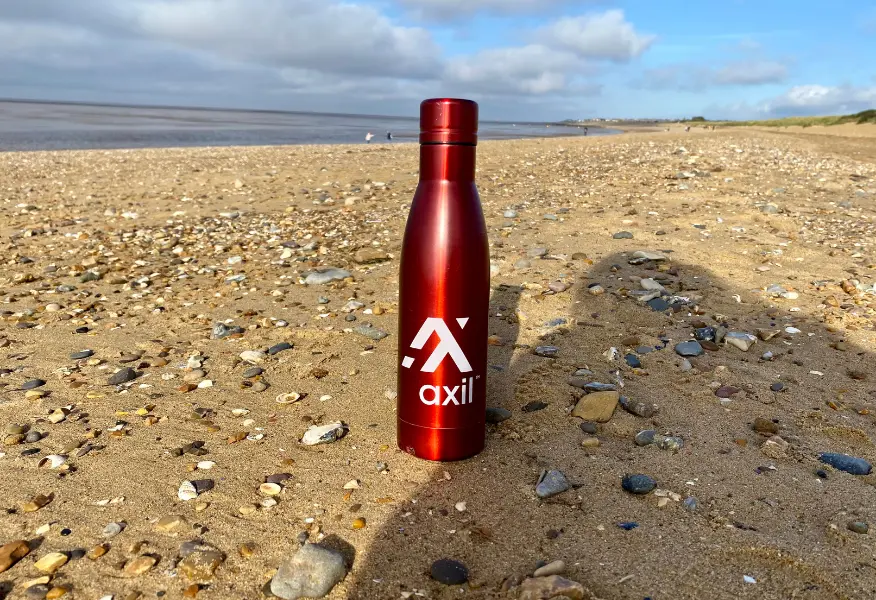
So this week, the Axil team has been challenged to do something very simple: remember the reusable cup when ordering a coffee.
It is a small thing. One cup will not change the world.
But that is not really the point.
The point is to stop for a moment and question something we have become very good at doing without thinking. We use something, decide we no longer need it, put it in a bin and move on. Once it leaves our hands, it becomes someone else’s problem.
What happens if we apply the same thinking to a manufacturing operation?
The scale changes dramatically.
Every waste stream leaving a manufacturing site represents something that has already had value attached to it: raw materials that have been purchased, energy that has been consumed, water that has been used, people who have handled it and processes that have been built around it.
By the time something becomes waste, quite a lot has already happened.
So perhaps the more interesting question is not how do we dispose of it more sustainably?
It is why did it become waste at all?
That shift in thinking matters.
Businesses need safe, compliant and environmentally responsible routes for the waste they generate. But sustainable waste management should not stop at disposal. The waste hierarchy gives businesses a clear direction: prevent waste where possible, then reuse, recycle and recover materials, with disposal as the last option.
For manufacturers, that means looking beyond the waste container and understanding what is happening at the point waste is created.
Manufacturers can reduce waste by preventing it at source, improving segregation, reusing materials, increasing recycling and recovery, and using waste data to identify where processes can be improved.
This is where Zero Waste Week connects directly to the work Axil does with complex manufacturing operations.
Axil works alongside customers to understand where waste is being created, what is driving it, how materials are being handled and what could realistically be changed. The aim is not simply to manage industrial waste more efficiently, but to identify practical opportunities to reduce it in the first place.
As Sophie from Axil explains:

“Zero waste isn’t about eliminating waste overnight. It’s about challenging what we accept as waste and asking what we could do differently. When we work closely with customers, we often find the biggest opportunities are right at the point waste is created — whether that’s preventing it, reusing materials or finding a better recovery route.”
Sometimes that means a simple improvement in segregation. Sometimes it means finding a better recovery route or giving a material another use. Sometimes the data reveals a pattern that points to a much bigger operational opportunity.
And sometimes, the best waste stream is the one that never gets created.
That is why partnership matters. There is no universal formula for becoming a zero waste facility because every manufacturing operation is different. The answer has to fit the process, the people and the commercial reality of the business.
And this is where the conversation becomes bigger than waste.
Reducing manufacturing waste can mean using fewer raw materials, avoiding unnecessary costs, improving resource efficiency, reducing environmental impact and making better use of the materials already moving through a business.
Waste reduction is not simply an environmental exercise. It can be a way of improving how a business operates.
That is the real “so what?” behind Zero Waste Week.
Environmental ambition only becomes meaningful when it translates into action. It might start with something as simple as remembering a reusable coffee cup. It might lead to a conversation about a waste stream that has always been accepted as unavoidable. And it might ultimately change the way a business thinks about materials, resources and the processes that turn them into waste.
Because waste is not just something to manage.
It can tell us something about the way we work.
For manufacturers, waste can be a valuable source of insight. What is being thrown away? How much? How often? Why? And what does that tell us about the process behind it?
Those questions can lead somewhere much more valuable than simply finding a route for the waste to leave site.
They can lead to prevention.
They can lead to reuse and recovery.
They can lead to better resource efficiency.
And ultimately, they can help businesses move closer to genuinely zero-waste operations — not by pretending waste does not exist, but by understanding why it exists and systematically reducing it.
Because if a business continually generates the same waste, perhaps the question should not only be how to manage it.
Perhaps it should be whether the process needs to create it at all.
That is the challenge Zero Waste Week presents.
Don’t just ask where your waste goes.
Ask why it exists in the first place — and what you could change.
Because waste is not simply something to remove from a site.
It is a signal.
A signal that can reveal where materials, money and resources are being lost — and where a process could work better.
The goal is not simply to manage waste better.
It is to create less of it in the first place.
And that is where real waste reduction starts.