

We are supporting our customers in transitioning to a circular economy business models. In a world grappling with too much waste and consumption, a circular economy offers a promising solution.
Recently, the UK made important moves toward this goal with two significant announcements. The first was a launch of the governments waste prevention programme ‘Maximising Resources, Minimising Waste” followed by the announcement of a new International Centre of Excellence. These steps show a commitment to tackling environmental issues globally.
- The ‘Maximising Resources, Minimising Waste’ programme highlights resource efficiency through reuse, repair, and recycling.
- The International Centre of Excellence on Sustainable Resource Management in the Circular Economy emphasises global collaboration for sustainability.
- Shifting towards sufficiency over excess is crucial for sustainable consumption patterns.
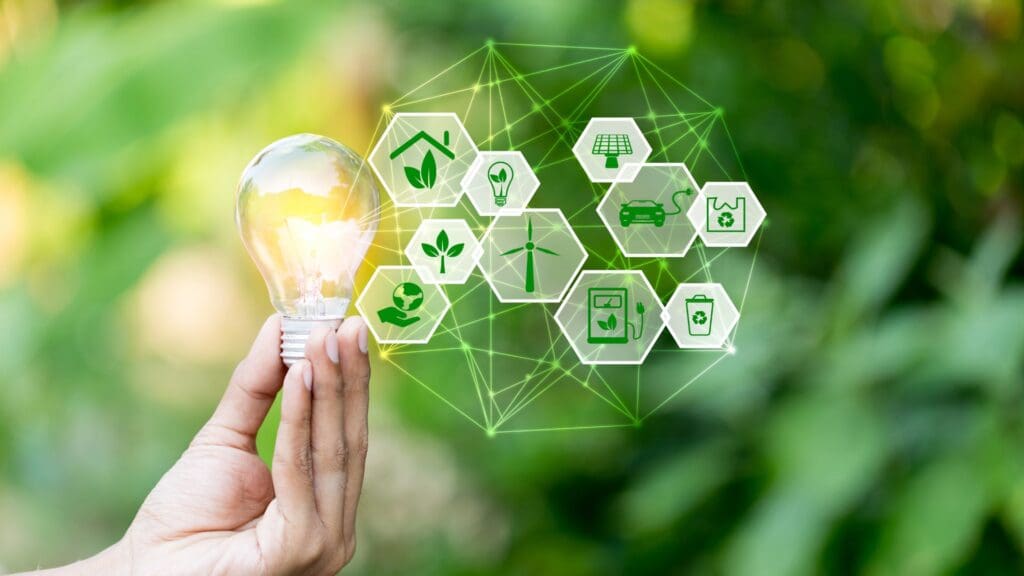
In July 2023, the unveiling of the ‘Maximising Resources, Minimising Waste‘ programme by Parliamentary Under-Secretary (Department for Environment, Food and Rural Affairs) Rebecca Pow marked a significant step towards reshaping consumption patterns and production processes. Through initiatives like reuse, repair, and recycling, this program aims to extend product lifespans and reduce environmental impact.
March 2024 brought another positive move with the establishment of the world’s first United Nations-backed International Centre of Excellence on Sustainable Resource Management in the Circular Economy.
While progress is evident, challenges persist. The Circular Economy Gap Report shows a decline in global circularity, with most materials being new. As evidenced by statistics revealing a reduction in secondary materials declining from 9.1% in 2018 to 7.2% in 2023. In just the past six years alone we have consumed over half a trillion tonnes of materials—nearly as much as the entirety of the 20th century.
Urgent action and a change in mindset are needed to reverse this trend and achieve broader environmental goals, valuing quality over quantity.

Axil’s Head of Sustainability and Zero Waste, Gina Rudkin said:
‘Our Sustainability & Social Value Charter drives our focus on waste prevention, reuse, redistribution and keeping products and material in use longer, supporting our client’s circularity, carbon and sustainability goals. Through education, awareness-raising, and collaborative upstream interventions, we aim to empower our customers to embrace circular economy principles in their operations.’
Using recycled materials and prioritising sustainable practices are key steps in reducing waste and protecting the environment.
The way we build and make things also matters. By focusing on energy efficiency and choosing materials that are better for the environment, we can lessen the impact of construction and manufacturing.
Changing how we think about what we buy and how much we use is important too. We should aim for having what we need rather than always wanting more.
This shift in mindset, along with education and supportive policies, can lead to a society that values long-lasting products and cares for the environment.
Looking ahead, we imagine a future where we consume thoughtfully, produce responsibly, and live in harmony with nature. To make this vision a reality, we must embrace new ideas, work together, and act now.
While there may be challenges ahead, the idea of a circular economy offers a pathway to a better world. Let’s take this chance to make a real difference by working together and making changes in our lives.

ADOPT CIRCULAR MANUFACTURING TECHNIQUES AND REDUCE WASTE.

MAKE THE MOST OF WHAT ALREADY EXISTS

USE SECONDARY MATERIALS IN MANUFACTURING

PRIORITISE CIRCULAR BUSINESS MODELS AND APPROACHES

REDUCE THE IMPACT OF THE BUILT ENVIRONMENT

BE AS ENERGY EFFICIENT AS POSSIBLE

ENGAGE THE FULL VALUE CHAIN IN JOINT INITIATIVES

REJECT FAST FASHION IN FAVOUR OF SUSTAINABLE TEXTILES

BUY WHAT’S NEEDED & REPAIR, RECIRCULATE WHERE POSSIBLE

EXTEND THE LIFETIME OF MACHINERY, EQUIPMENT AND GOODS