

Practical strategies to cut costs, boost efficiency, and lower carbon emissions – without slowing down operations.
Warehouse waste isn’t just a nuisance; it’s a missed opportunity. Every bin of discarded packaging, every pallet sent to landfill, and every wasted forklift journey represent lost money, wasted space, and squandered resources. With the right systems, warehouses can dramatically reduce waste while unlocking significant cost savings and sustainability gains.
Material Safety Data Sheets
A clear, up-to-date database of Material Safety Data Sheets (MSDS), waste volumes, and waste sources is your secret weapon. Why? Because knowing exactly what waste you generate, where it comes from, and how much it weighs turns waste management from costly guesswork into a sharp, strategic advantage. Keeping these records accurate and current lets you pinpoint solutions that save money and reduce your environmental footprint – making your operations leaner, sustainable, and more profitable.
Strategic Planning
Strategically placed, clearly labelled waste containers – both inside and outside the warehouse – cut disruption and unnecessary movement. When bins are easy to find and sorted by category right where they’re needed, employees can dispose of waste quickly and correctly, avoiding wasted time or contamination. Avoid placing bins where they obstruct foot traffic or machinery, which slows operations.
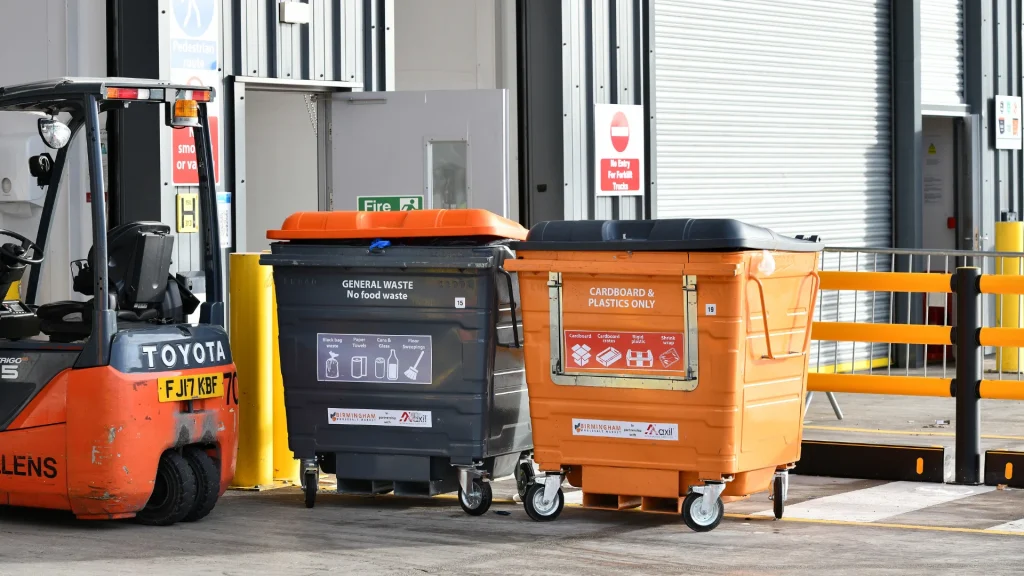
To boost efficiency and cut emissions further, use forklifts on optimised “milk-run” routes to collect multiple containers in a single trip, streamlining waste collection without interrupting workflow.
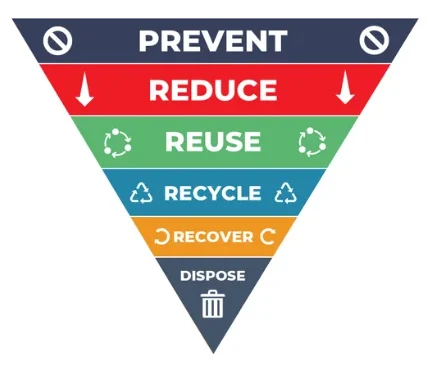
Extract value and climb the waste hierarchy
For warehouses handling large volumes of wooden waste, such as pallets, compacting is key. Specialised roll-packer compactors can compress waste five to seven times more than traditional containers, cutting collection frequency and maximising yard space. But to truly climb the waste hierarchy, circular pallet and packaging programmes are essential.
Instead of discarding damaged materials, these initiatives extend product lifecycles, reduce resource consumption, lower landfill waste, and cut procurement costs.
Research shows that reusable packaging systems can cut solid waste by up to 72% and reduce carbon emissions by as much as 60%, while also delivering packaging cost savings of 25–40%. These systems enhance customer loyalty by 35% and improve public perception (Metrobi, 2025).
Taking a broader view, treating waste as a resource can transform warehouse operations. Items like shelving, steel strapping, safety barriers, and electronics (computers, scanners) can be recycled or refurbished rather than discarded. Common materials such as cardboard, plastic wrap, and wooden pallets are regularly recycled, while worn-out gloves and workwear can be diverted to energy recovery processes like controlled incineration, ensuring minimal landfill waste.
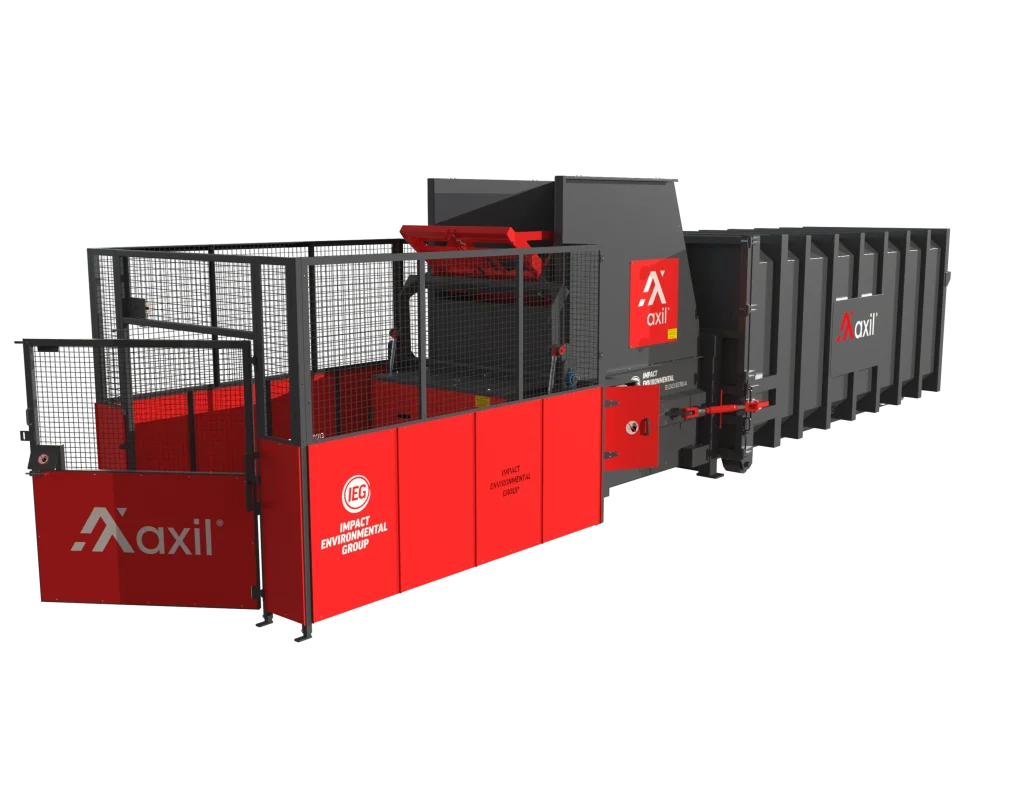
Outdoor bins with compactors enable continuous, efficient waste removal, turning waste streams from costly burdens into valuable assets that drive sustainability and operational efficiency.
Data-driven waste management
Data-driven waste management delivers measurable results. A strong example of this is Axil collaborated with a leading automotive manufacturer, cutting waste management costs by 47% and reducing CO₂ emissions by 167 tonnes. This success came from comprehensive waste assessments, innovative weighing and tracking technologies, and less common but proven methods. These tools boosted recycling rates and streamlined operations, showing how targeted, tech-enabled strategies cut costs while advancing sustainability goals. (Axil Integrated Services, 2024).
Automated waste segregation systems further improve recycling quality by sorting materials at the source, reducing contamination and enhancing waste value. However, technology alone isn’t enough. Broad staff awareness and ongoing training are critical to embedding sustainable habits. Educated employees ensure maximum recycling effectiveness by consistently following best practices.
Adopting circular economy principles
Further waste reduction is achieved by adopting circular economy principles – reusing packaging, repairing equipment, and partnering with suppliers committed to keeping products and materials in highest use for as long as possible. Together, these strategies can drastically cut waste generation and build a culture where sustainability becomes second nature. (ellenmacarthurfoundation).
The benefits of smarter waste practices reach far beyond the warehouse gates. Circular economy strategies could cut global greenhouse gas emissions by 22.8 billion tonnes – around 39% of 2019 levels (Circle Economy, 2024). Reuse models alone have the power to slash packaging production by up to 90%, cut related emissions by 80%, and save around £430 for every tonne of plastic waste avoided (Reuters, 2025).
For businesses, that’s not just good PR – it’s lower costs, higher efficiency, and a stronger market position. On a global scale, these efforts directly support the United Nations Sustainable Development Goals, particularly Goal 12 (Responsible Consumption and Production) and Goal 13 (Climate Action), turning everyday operational improvements into measurable contributions toward a healthier environment.
As warehouses face mounting environmental and operational challenges, circular waste management moves beyond compliance to become a strategic driver of value and resilience. Leveraging data, technology, and an engaged workforce unlocks efficiencies that benefit both business performance and ecological responsibility.
Ultimately, smart waste management unites technology, employee commitment, and sustainability principles to create cleaner, leaner, and more responsible logistics hubs – transforming a costly burden into a powerful competitive advantage and a meaningful step forward for industry and society.