

What Is ESPR?
The Ecodesign for Sustainable Products Regulation (ESPR) is the EU’s new framework to make products more efficient, longer lasting, and easier to repair or recycle. It applies to all products sold in the EU, including imports. It will change the way products are designed, made, and sold in the EU.

Iona Beresford, Sustainability Manager, comments that
“With the ESPR implementing bans on the destruction of unsold apparel, accessories and footwear and with recycling being classified as a form of destruction — this is a massive step for industries, prompting a significant shift toward moving products up the waste hierarchy”.
The ESPR replaces the older Ecodesign Directive and now applies to nearly all physical goods, not just energy-related ones and addresses premature obsolescence.
Non-compliance to ESPR doesn’t just mean fines — it risks legal liability, blocks market access, and weakens consumer trust.
Here’s what’s changing:
✅ ‘Eco-Design’ Requirements, products must be more durable, repairable, reusable, and recyclable.
✅ Digital Product Passports (DPPs) become mandatory to prove compliance & traceability.
✅ Ban implemented on unsold textiles goods and footwear being destroyed (from 2026) with scope for similar bans in other sectors if evidence shows they are needed.
✅ Strict deadlines begin in 2025, with full compliance phased in through 2029.
✅ Large (and eventually medium) enterprises to disclose annual information on number of unsold consumer products on website, weights of unsold product and reason for discard.
Why This Matters
- Covers €1 trillion in EU market activity
- Targets 31% of climate impact from EU consumption
- Creates new market opportunities for sustainable products
- Enables continued market access
- Increases consumer trust
Product Categories included in the ESPR working plan
The EU has identified product groups with the highest potential for environmental improvement. If you manufacture any of the below, then the advice stated may apply to you.

- Textiles & Apparel (including garments and footwear)
- Furniture (including mattresses)
- Tyres
- Mattresses
- Consumer Electronics
- Small Household Appliances
- Mobile Phones & Tablets
- Dishwashers
- Fridges & Freezers
- Electric Vehicle Chargers
- Lighting Products
- ICT Equipment (e.g. routers, modems)

- Iron & Steel
- Aluminium
- Chemicals (particular focus on large-volume organic/inorganic)
- Paints
- Detergents
- Lubricants
- Plastics & Polymers
- Recycled Content & Recyclability of EEE (Electrical & Electronic Equipment)
Exemptions apply to food, some medical products and plants.
If your business brings any of these products to EU markets, it is time to think about how you will anticipate the requirements and respond to them.
The Law – ‘Eco-Design Requirements’
The ESPR sets rules for performance and information – known as ‘Eco-Design Requirements’ – for almost all categories of physical goods.
These rules will:
- Improve product durability, reusability, upgradability and reparability
- Enhance the possibility of product maintenance and refurbishment
- Make products more energy and resource-efficient
- Increase recycled content
- Make products easier to remanufacture and recycle
- Set rules on carbon and environmental footprints
- Limit the generation of waste
- Improve the availability of information on product sustainability
This applies to EU made and imported products
What Is the Digital Product Passport (DPP)?
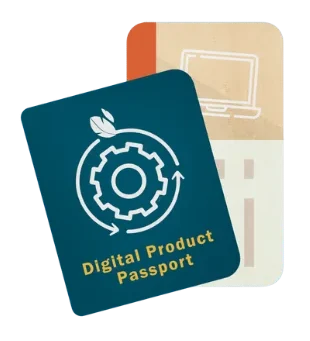
A Digital Product Passport is a digital identity card for products, components and materials which will store relevant information on the product. The Passport will make it easier for consumers, manufacturers, and authorities to make more informed decisions related to sustainability, circularity and regulatory compliance. It will also allow authorities to perform automatic checks on the existence and authenticity of the DPPs of imported products.
What Is the Goal of These Changes?
- Reduce environmental impact and energy use
- Help consumers choose more sustainable products
- Support manufacturers with clearer, harmonised standards across the EU
- Boost innovation and competitiveness in sustainable manufacturing
Manufacturer Obligations Timeline (2025–2030)
| Date | Obligation | Details |
|---|---|---|
| July 2025 | First DPP Implementing Act Adopted | Defines how product data must be made available digitally (e.g via QR codes). Start preparing data systems. |
| 2026 | First product requirements apply | Iron & Steel and Dishwashers must meet new eco-design rules. DPPs begin for some categories |
| July 2026 | Ban on destruction* of unsold textiles and footwear (large enterprises) | Large manufacturers must stop destroying unsold consumer products. SMEs are exempt until 2030. |
| 2027 | DPP mandatory for first wave of products | Includes batteries, textiles, electronics, steel, aluminium, iron, detergents, paints, tyres, furniture, footwear, and communication tech. |
| 2027 | Ecodesign rules for Textiles and Tyres | Must meet new sustainability, repairability and recyclability standards. |
| 2028 | Furniture, aluminium, EV chargers, fridges and motors. | New Ecodesign and DPP requirements apply. A review of working may expand product scope. |
| 2029 | Mattresses & recyclability for electronics | Additional product categories regulated. Horizontal rules on recyclability and repairability apply. |
| July 2030 | Ban on destruction of unsold textiles and footwear *(medium enterprises) | Medium sized manufacturers must comply. Disclosure of discarded products becomes mandatory. |
| 2030 | Mobile phones and tablets | Final wave of Eco-Design and DPP obligations for consumer electronics. |
*What is destruction and what is an unsold consumer product?
What’s particularly interesting to note is that recycling is deemed as destruction under ESPR, pushing efforts up the waste hierarchy. It states “The concept of destruction as outlined in this regulation should cover the last three activities on the waste hierarchy, namely recycling, other recovery and disposal”.
Destruction: Intentional damaging or discarding of a product as waste apart from discarding for the purpose of reuse, refurb or remanufacture.
Consumer product: Any product, excluding components and intermediate products, primarily intended for consumers.
What Manufacturers Must Do
- Prepare product lifecycle data: carbon footprint, material origin, repairability, recyclability.
- Integrate Digital Product Passport systems: QR/NFC-enabled digital profiles for each product.
- Avoid destruction of unsold textile goods and footwear: Plan for reuse, donation, or recycling. Consider other product categories as well.
- Look out for ‘delegated acts’: These define specific obligations per product group.
- Ensure Clear Labelling: Products may need new labels showing durability, carbon footprint, recyclability and recycled content.
Regulation – EU – 2024/1781 – EN – EUR-Lex
Ecodesign for Sustainable Products Regulation – European Commission
Regulations: ecodesign of energy-consuming products – GOV.UK
DPP: Here are 20 product groups identified and prioritized in the ESPR